
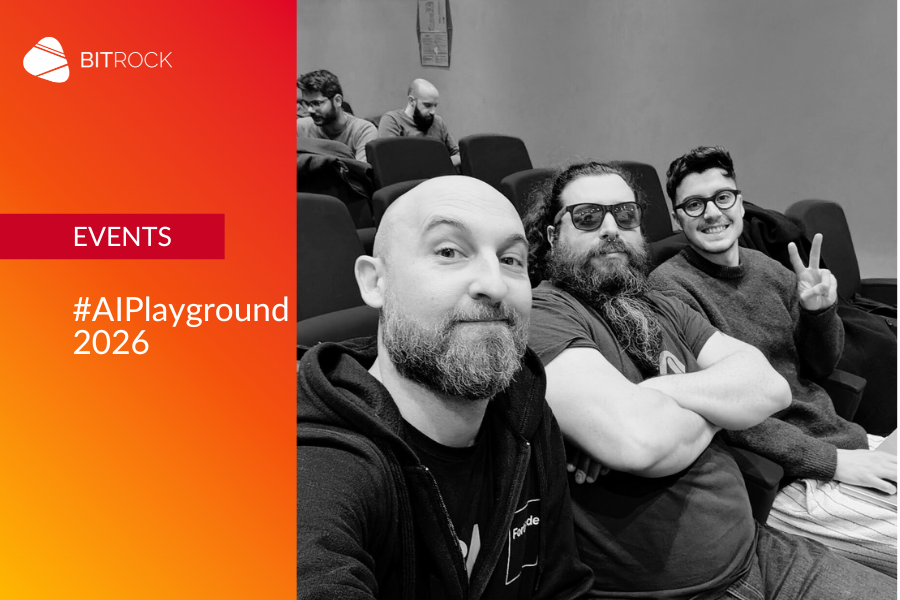
Working remotely has its undeniable advantages, but there is one thing that no Google Meet call can ever replace: the energy of a day spent in person with your colleagues, especially when the excuse is a glimpse into the technological future.
On January 23, Daniel Zotti, Davide Ghiotto, and I met up in Vicenza for AI Playground 2026, a free event dedicated to front-end developers, with the aim of demonstrating the potential of Large Language Models — and Google Gemini 3 in particular — and discussing some of the best ways to integrate them into our projects.
Being able to finally chat in person, laugh over coffee, and share our first impressions live, even before the keynote began, gave the day a whole new flavor.
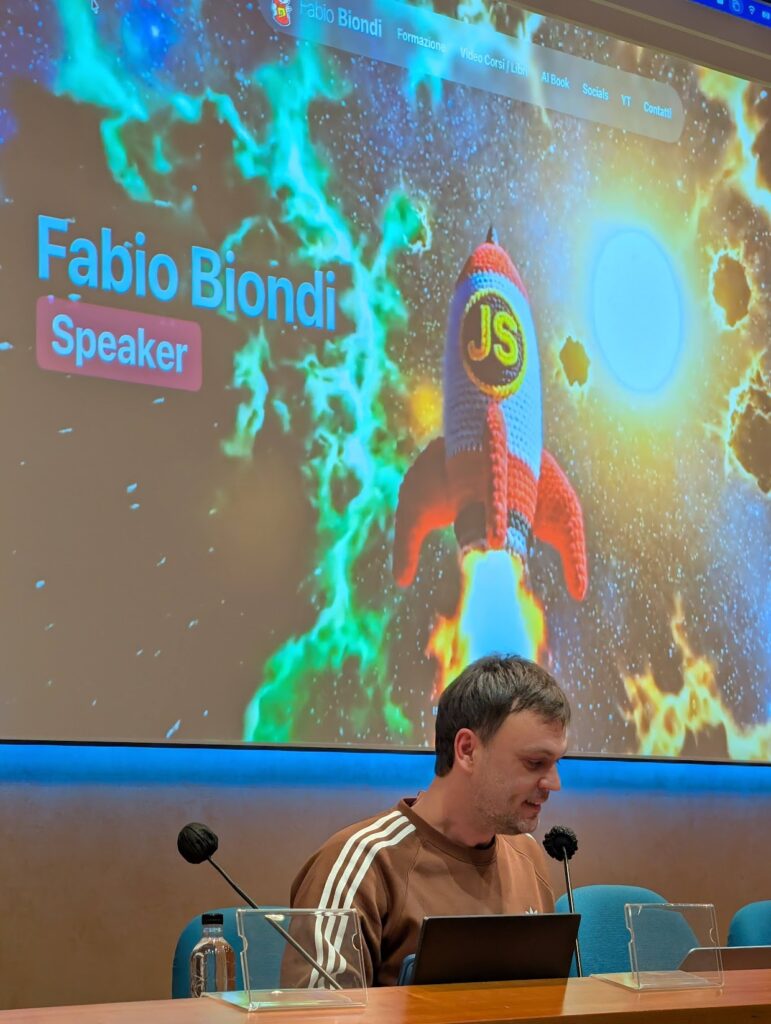
La Masterclass: Entrare nel cuore di Gemini 3
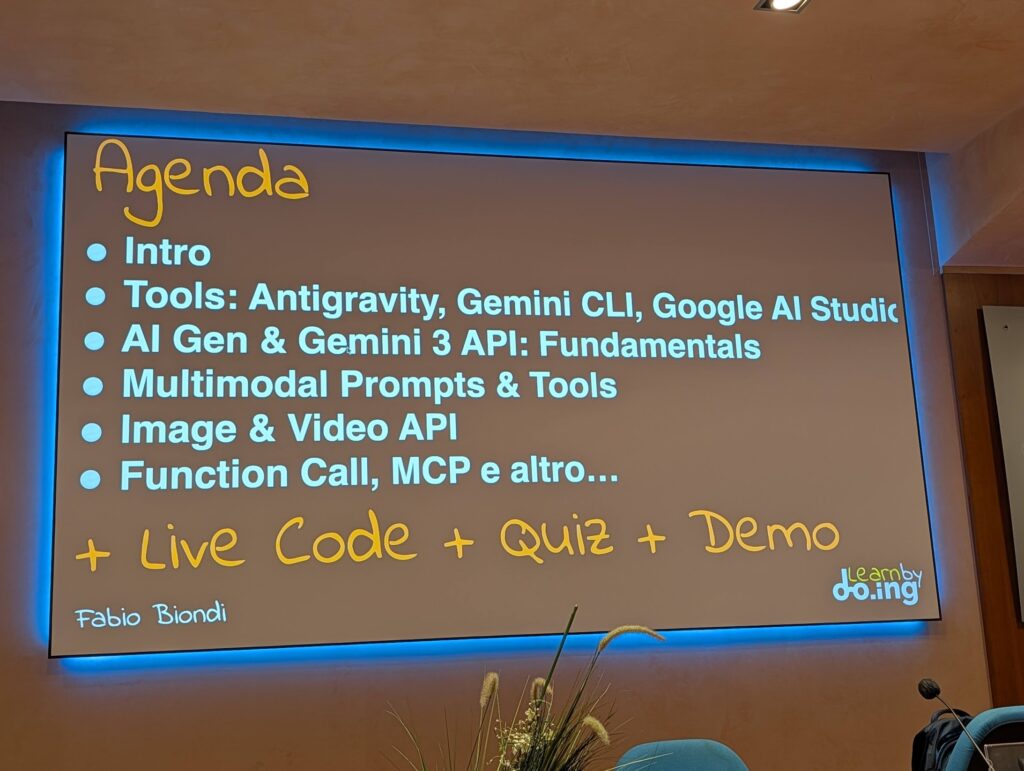
The morning kicked off with a three-hour marathon led by Fabio Biondi. It wasn’t the usual theoretical overview, but a real hands-on workshop. We explored the fundamentals of Gemini 3 and its APIs, but the real highlight was the tools:
- AntiGravity: Google’s new AI-powered IDE that promises to radically change the way we write code.
- Gemini CLI and AI Studio: Tools that we are already using in our projects and that have fully demonstrated how Generative AI can make our workflows and development easier and smoother
Seeing the power of Multimodal Prompts live—capable of processing videos and images with incredible accuracy thanks to the NanoBanana model—gave us a thousand ideas on how to evolve the interfaces we develop every day at Bitrock.
Networking, Sushi and Genkit
The lunch break was the perfect opportunity to discuss with my colleagues what we had learned in the first part of the day and, above all, to spend some time together face to face. Between one maki and another, we discussed how these technologies could be applied to our clients’ real projects. It is often during these “offline” moments that the best insights arise.
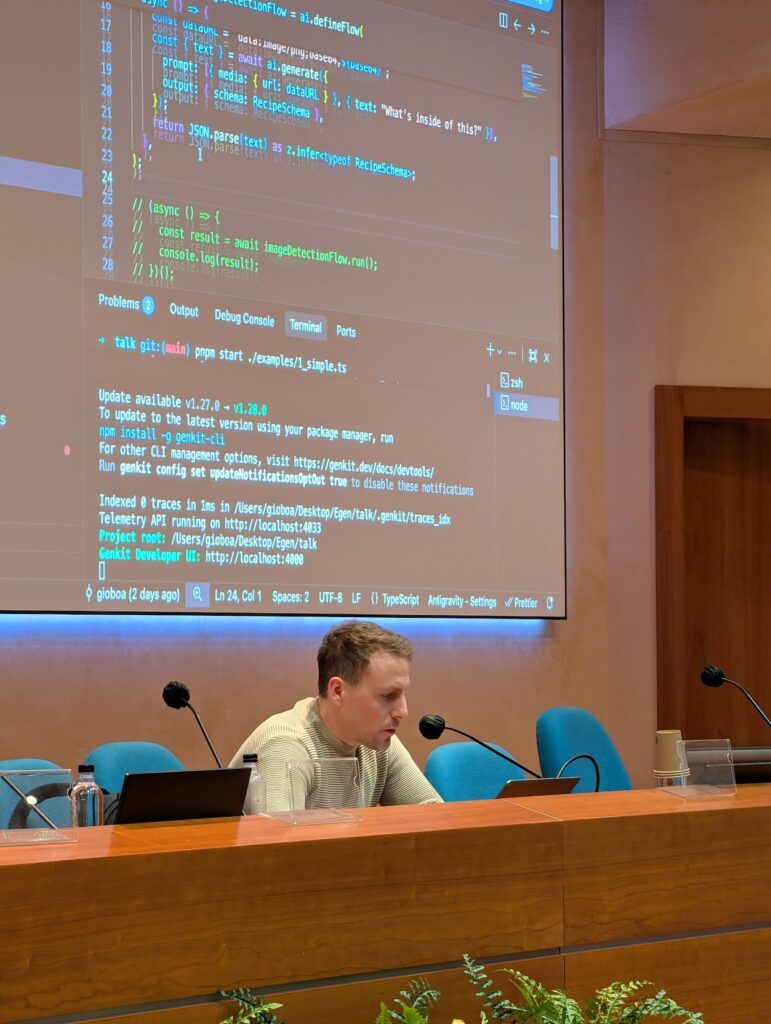
The afternoon continued with highly technical sessions. Giorgio Boa showed us the power of Firebase in combination with GenKit, Google’s open-source framework that simplifies the integration of complex AI features. We talked about how to transform a traditional app into an “intelligent” experience in record time.
Spec Driven Development: Staying in control
One of the topics that made us think the most was Spec Driven Development (SDD), presented by Matteo Ronchi. In a world where AI can generate code at breakneck speed, the real challenge for us developers is to maintain control and quality. We explored methodologies and frameworks to ensure that AI is a powerful assistant, but always guided by rigorous human specifications.
There was no shortage of insights on Andrea Saltarello’s RAG (Retrieval-Augmented Generation) for customizing model responses with specific data and the use of Function Calling and MCP to allow AI agents to interact with the browser and external tools (such as Chrome DevTools).
Conclusion
Between coffees during breaks, we had the pleasure of talking with developers from all over Italy. Hearing different opinions, sharing common problems, and discovering new solutions is the very essence of these events.
We returned home with our minds full of ideas and even more convinced that AI should never be seen as a substitute for humans, but rather as an enhancement, a tool that allows us front-end professionals to focus on what really matters: the user experience and business logic.
The Vicenza Playground was just the beginning. The future is multimodal, agentic, and incredibly fast, and we are ready to lead the way.
Main Author: Gianluca La Rosa, Front-end Developer @ Bitrock